Categories
Climate education Community action

Admitting Failure

– And moving forward

Our upcoming online conference on 6 June is titled Teaching for a Better Future. The title was chosen with care and intention. During the event, we’ll be showcasing practical, inspiring examples of how language educators around the world are engaging students with nature and climate issues – helping them imagine, and perhaps shape, a better future.

But what does better really mean?

It’s a relative term. While most of us want to believe in a brighter future, it’s becoming increasingly difficult to ignore the mounting evidence that the road ahead looks deeply challenging. This isn’t a call to give up. And we absolutely need to continue bearing down on the production of greenhouse gases. Rather, it might be time to shift our perspective. Perhaps the goal now is not to create an objectively better future, but to make the future less bad than it could otherwise be.

This shift brings tough questions – about hope, resilience, and motivation – particularly for educators tasked with preparing students for the world ahead.

In this light, we recommend reading a thought-provoking piece by Rupert Read of the Climate Majority Project. In it, he argues:

“The true power of the climate movement is now to admit our own powerlessness.”

It’s a stark but important point. By letting go of false optimism, we free ourselves from the exhausting effort of maintaining denial about the reality of our predicament. That emotional energy, Read suggests, can be redirected – toward more meaningful action, deeper connection, and more honest engagement with our students and communities.

You can read the full article here: The true power of the climate movement is now to admit our own powerlessness

Categories
books Inspiration Politics

Roger Hallam

In a recent webinar, John Crick from Aspire.Sustain shared a striking U-shaped graph. At the bottom sat the “Trough of Disillusion,” with the “Slopes of Enlightenment” climbing out of it, eventually levelling off into the “Plateau of Productivity.” If you’re curious, you can watch the full video here.

That image stuck with me – especially when thinking about how we respond to the climate emergency. On bad days, I find myself trying to avoid the Trough of Disillusion. On better days, I feel like I’m climbing the (early) Slopes of Enlightenment, spurred on by the hope that comes from action.

In this spirit, I want to recommend a powerful podcast: Designing the Revolution, by Roger Hallam – co-founder of Extinction Rebellion, and founder of Just Stop Oil and Insulate Britain. Hallam received a four-year prison sentence in the UK after being convicted in 2024 for organising motorway protests two years earlier. His goal was to draw attention to the dire threat caused by greenhouse gas pollution. He is one of around eleven people currently imprisoned in the UK for similar acts of protest.

Paradoxically, prison seems to have been a liberating experience for Hallam. Speaking over the prison phone for his podcast, he shares a renewed sense of hope and insight, with episodes like A New Way of Seeing, Finding Freedom Within, and The Prison of Perception. He has also published a new book, 50 Articles the Media Wouldn’t Publish. Together, the podcast and book offer fresh ways to think, act, and grow – both personally and politically. For me, they’ve been a much-needed lift out of the Trough of Disillusion.

Highly recommended.

Categories
Uncategorized

Happy Earth Day!

Knowing what we know, that may be an oxymoron. But we like to stay positive and also know that hope springs from action. That’s why we do what we do, encouraging educators around the world to respond to the climate and ecological crisis personally and in their organisations.

So on Earth Day 2025 the founder of Green Action ELT, Chris Etchells, will be joining the Earth Day Special IATEFL Live! Show. The livestream will be broadcast to the IATEFL Facebook page, LinkedIn, and YouTube site.

I have no idea what questions I’ll be asked, but I’ll try to keep it positive! I hope you can join us.

Best wishes, Chris Etchells

Categories
Climate education Uncategorized

Map your campus

National Education Nature Park is an initiative developed by the Natural History Museum in London together with the Royal Horticultural Society, the Royal Geographical Society and a host of other leading institutions in the UK. The aim is to support the development of climate action plans in education settings England, an opportunity to transform the way we teach climate education and support young people to act and increase biodiversity across England. 

Mapping your site is an important first step and this Thursday April 3rd you can join a webinar to learn how to:

  • Use the Habitat Mapper tool to create a baseline map
  • Explore different habitat types and what they mean for your site
  • Discover creative ideas for running a habitat mapping session with your class

Register now here or join the next session on Thursday 24 April

Categories
Sector action Travel and transport

Green ELT

Good to see green thinking making its way across our sector: https://mailchi.mp/betauk/green-skills-16106930?e=f9bc553bc4

Categories
calendar days Climate education

Calendar Days

There are lots of environmental days coming up in the near future:

Friday, 14 March – International Day of Action for Rivers

Tuesday, 18 March – Global Recycling Day

Thursday, 20 March – World Rewilding Day

Friday, 21 March – International Day of Forests

Saturday, 22 March – World Water Day

And of course, Earth Day on Tuesday, 22 April

Green Standard Schools have lots of free teaching materials to help you make the most of these calendar opportunities: visit https://app.greenstandardschools.org/public-lesson-plans

If you find the materials useful, share them with colleagues and on social media – they are an open, free resource to help everyone green their language lessons!

Categories
Climate education

UK’s first Climate Justice undergraduate degree

Wonderful to see the University of Sussex leading the way in the UK with this inspiring programme that offers real hope for the future:

https://www.theguardian.com/education/2025/feb/27/sussex-to-launch-uks-first-climate-justice-undergraduate-degree

This news comes after a Future Forum (British Science Association) survey found that 7 in 10 UK 14-to-18-year-olds would welcome the opportunity to learn more about climate change in school and that 7 in 10 felt that climate change education should be included across all subjects. Find the full report at https://www.britishscienceassociation.org/Handlers/Download.ashx?IDMF=0f014842-012d-4199-a5bf-fdfc539d4549.

Categories
books Climate education

Activities for a Greener Mindset

Harry Waters’ new book Activities for a Greener Mindset was published in December 2024. The book is part of the DELTA publishing series “Ideas in Action”. 

Activities for a Greener Mindset is a guide for language teachers who want to incorporate environmental issues into their teaching. The book includes photocopiable activities and is linked to the Sustainable Development Goals. 

Harry is a regular presenter on Green Action ELT – you can find videos of his sessions in our webinar library.

This book aims to help teachers integrate environmental concerns into their teaching and lives.

Categories
books Politics

A book I’m reading

Stephen Markley’s The Deluge is a striking example of art predicting reality. One vivid scene – a frantic escape into a burning Los Angeles – feels eerily relevant, given the recent news about wildfires and even incarcerated firefighters in The USA.

This 900-page, masterfully written novel, set in the “near future sci-fi” genre, begins in 2013 and spirals into a chaotic, apocalyptic world as society crumbles under climate collapse. The character development is excellent, and the book’s scope is epic.

While the detailed, scientific “manifesto” sections might not appeal to all readers, the core story is gripping. Considering how disturbingly accurate the book’s vision is becoming, one can only hope the lessons are not lost on our leaders.

Chris Etchells is Director of English Country Schools

Categories
Inspiration Opinion

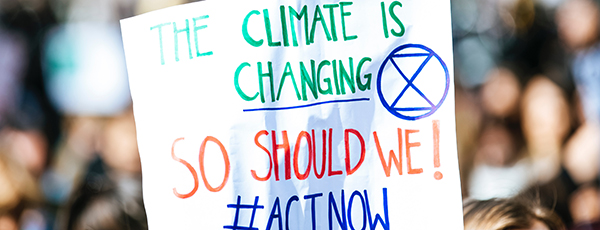
Three reactions to the climate crisis

Scientists say the climate is reacting more quickly and more violently than expected. And that’s just the one degree of global warning that is currently baked into the system. We are on track for 2.5C and maybe more.

But why should we care?

I’m not suggesting you don’t care. Presumably at an individual level we all feel concern for the younger people in our lives who will have to face whatever the future holds.

But why should we care as providers of often short-term English language courses? Courses that, because most pupils travel by plane to us here in the UK, have very high emissions.

In recent years, we’ve not only experienced a pandemic, but massive wildfires in Australia and the USA. Droughts and heatwaves have been affecting every part of the planet. Floods in West Africa and Pakistan have displaced millions of people. Heat records were broken all over the UK in summer 2022. We saw catastrophic flooding in Germany and unbearable temperatures in Athens, Madrid and Rome.

If the crisis felt remote before, there’s no way we can pretend it’s not our problem now. And, as we all know, our emissions are helping to create and intensify the problem.

So what should language centres do? It seems there are three possible reactions to the situation:

  • One: shut up our schools, the flight emissions are just too high.
  • Two: carry on as before, it’s a losing battle and we can’t make a difference anyway.
  • Three: transform our schools in response to a changing world and as part of shaping a better future.

Three reactions

Close up shop

So what now? Things are bad and set to get worse. But what should a junior summer school like mine do about it?

I find myself in a contradictory position. On one hand I am helping encourage organisations to reduce their emissions through Green Action ELT. At the same time, I’m trying to drum up business for our summer school, knowing most pupils will fly.

It’s not a comfortable position. Should I pack up my bags and find something else to do?

While this reaction may absolve us of personal responsibility, children will still come to the UK to learn English. And, if they don’t visit my school, they’ll go somewhere else. Perhaps to a school that doesn’t discuss environmental topics in the classroom or try to reduce waste and energy use in the way that we do.

Carry on as before

Or perhaps I shouldn’t worry so much, and just get on with things.

Carry on ‘business as usual’ because we’re just one school and can’t do much about global problems anyway. Maybe it’s easier not to acknowledge the problem, or at least our part in it. Besides, we don’t want to risk putting pupils off; we don’t want to kill the goose laying the golden egg.

The problem with that position is that it isn’t very moral. And it’s short-sighted.

Are we happy taking money from parents with the promise that we are preparing their children for the future, while in the process helping putting at risk the very future that we say we are preparing them for?

While we may be losing the battle to keep global warming to 1.5C, every fraction of a degree above that will be counted in greater human misery and lives lost. Which means everything we do to cut emissions will help reduce suffering. We are morally obliged to do what we can.

Prioritising profit now over a liveable planet later, may not be good business in any case. Why are so many brands and products shouting out their commitments to carbon neutrality and a clean, green planet? They know shoppers and staff care. Whether they’re pushed to act or lie about action, they are responding to changing pressures and priorities. People, especially young people, care about sustainability.

And we can apply the same logic to our courses.

Time for transformation

So, scrapping closing the school and carrying on regardless, our third option is: do something. Respond to the situation and try to reduce our emissions as far as we possibly can.

It the right thing to do. We are facing a crisis that is already taking lives, and we must act.

Action gives us agency in a rapidly changing and often scary situation. It gives us a chance to reshape our lives, schools and communities to address other problems, like inequality, that are so entangled with the climate crisis.

It is also means responding to a topic that is increasingly important to our pupils and their families.

So where do we start?

Responses in the sector span a continuum. At one end we see superficial changes – recycling and quitting plastic cups, say. Really just tinkering around the edges and risking the charge of greenwashing if the impact of these actions is overemphasised. At the other end, organisations are examining every part of their operation to find ways to reduce emissions and use their position for positive change.

As the Green ELT movement grows, we must be careful to fall on the impactful end of the spectrum. To start with, if you have not already done so, write an environmental policy. Get together as a team and find colleagues who can lead and maintain the momentum of your environmental efforts.

Do everything you can, from food to fuel, classroom to conference.

Take action.

Adapted from a talk at the Young Learners English UK AGM 2022